The staging
How a 360-degree stage works: theatre in the round and Magic Mike Live
What it means when a show surrounds its audience, and how that changes where you sit and what you see.
Hold my seats ↗Quick answer
A 360-degree staging puts the audience on several sides of the performance, so the show faces outward in every direction and performers move through the room. The booking page for Magic Mike Live describes its staging as 360-degree and inspired by the films. Wikipedia defines theatre in the round as a stage the audience surrounds, and says actors typically enter and exit through the audience.
The idea in one line
Most theatres use a proscenium: a frame at one end of the room, with the audience facing it. A staging in the round removes the frame. Wikipedia defines theatre in the round, also called arena theatre or central staging, as a setup in which the audience surrounds the performance area. The booking page for Magic Mike Live calls its layout 360-degree and says it is inspired by the films, which tells you the audience is meant to sit on more than one side. It does not publish a seat plan, so this guide describes the form, not the room.
Where the performers go
Wikipedia says that in the round, actors typically enter and exit through the audience or from beneath the stage, and that the stage is usually level with or slightly below the audience. Both habits change the feel of a performance. Performers pass close to seated guests, and the action seems to arrive from several directions instead of from the wings. The article adds that minimal set design is used so that scenery does not block any angle of view. For a show of dancers and acrobats, which depends on bodies and movement more than on painted scenery, that logic fits well.
A brief history
Wikipedia traces the format to ancient Greek and Roman performance and says Glenn Hughes's Penthouse Theatre in Seattle opened on 19 May 1940 and is called the first purpose-built theatre in the round in the United States. In Britain, the article credits Stephen Joseph with popularising it in the 1950s, and it lists the Royal Exchange in Manchester and the Crucible in Sheffield among well-known round stages. It also notes that music tours have borrowed the idea: U2's 360° Tour is among its examples. A form with this history is no gimmick; it is an established alternative to the framed stage.
What it means for your seat
In the round, no seat looks at the back of the action all night, and no seat sees everything at once. Wikipedia says the format suits high-energy and participatory productions, which matches a dance-and-acrobatics bill. The practical consequence is that your view changes as performers move, so a seat is less a fixed vantage than a position among several. The booking page does not describe seat categories in public text, so use the calendar and your confirmation for options, and ask the venue through the booking page if access matters.
How it differs from a conventional night
At a conventional musical you watch a picture frame, and the frame hides the machinery. In the round the machinery is part of the show: lights and technical elements can be exposed, Wikipedia says, and parts of the audience can be lit. That makes the evening feel more like an event you take part in than a story you are told. People who like that sense of occasion tend to enjoy the form; people who prefer to sit back in the dark may like it less.
Does the Hippodrome suit it?
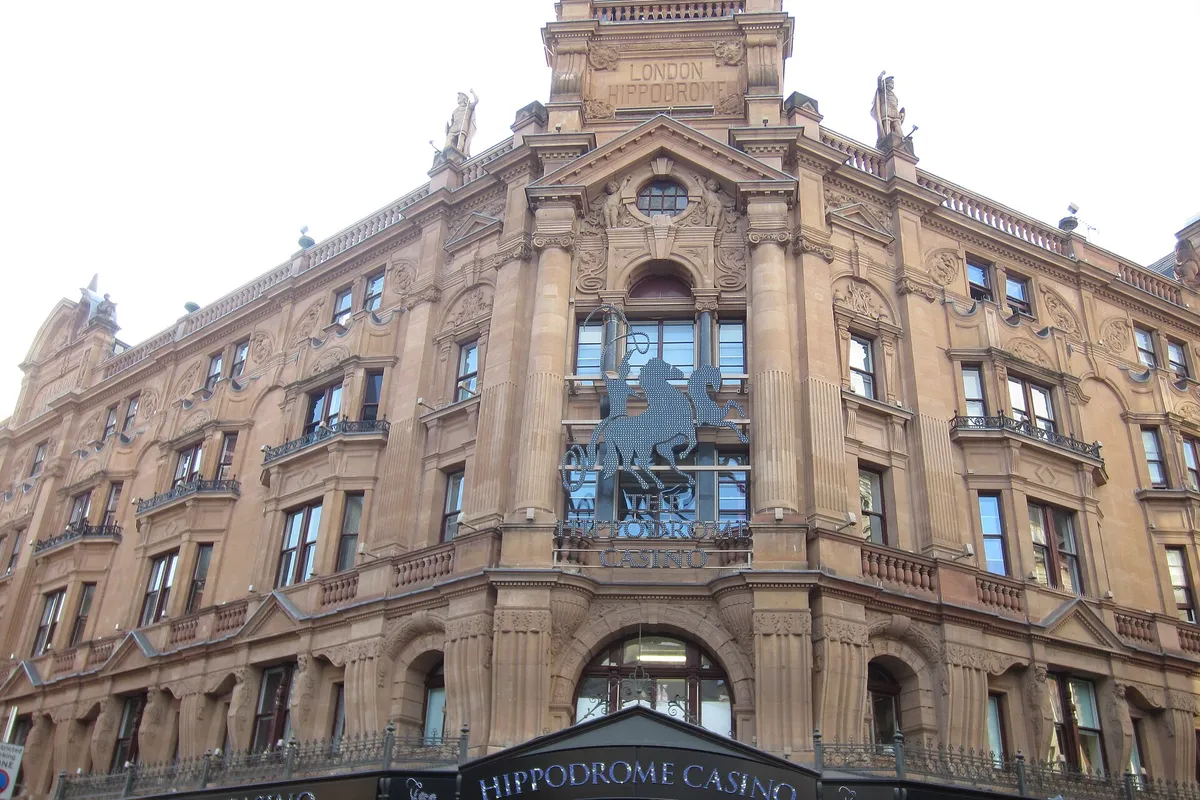
The Hippodrome began as a circus venue with an arena, Wikipedia says, so a room built around a central space has a long precedent here. This guide does not claim the layout of the current theatre beyond what the booking page says. The page describes the staging as 360-degree, lists dance routines, acrobatic acts and comedy, and names the Theatre at the Hippodrome Casino as the venue.
Frequently asked questions
What does 360-degree staging mean?
The audience sits on several sides of the performance, so the show faces outward and performers move through the room, as Wikipedia describes theatre in the round.
Does every seat see the same thing?
No. In the round the view changes as performers move, so each seat sees a different side of the action.
Is there a seat plan online?
The booking page publishes none in its public text, so check the calendar and your confirmation.
Sources